
Key Takeaways
- Myopia means distant objects look blurry while close objects appear clear.
- Hyperopia means close objects often look blurry while distant objects are clear.
- Both are refractive errors and can be corrected with glasses or contact lenses.
- Glasses, contact lenses, and surgery are all options for correction.
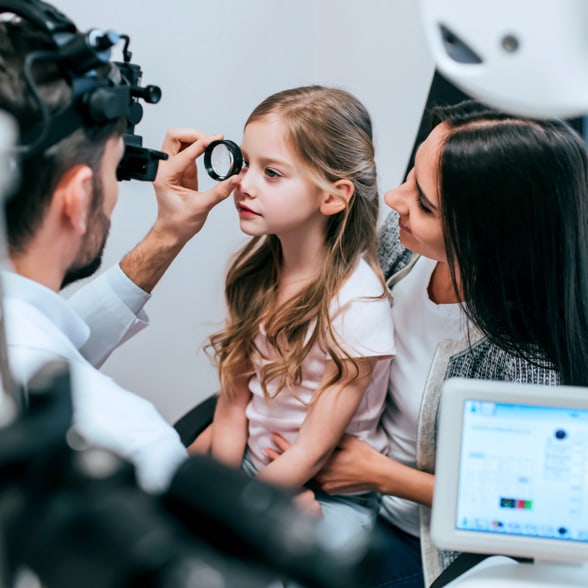
- Children’s eye exams are important to help detect vision issues before they impact learning.
If you’ve noticed your child squinting at the TV from across the room, or found yourself holding your phone at arm’s distance just to read a text, you may have wondered what’s going on with your vision. At Oceanside Optometry Clinic, our team sees these kinds of concerns come up regularly, and we want to help you understand what may be going on and when to book an eye exam.
Myopia is when you have trouble seeing objects far away, and hyperopia is when you have trouble seeing nearby objects. Both are refractive errors, meaning light isn’t landing in the right spot at the back of your eye, and they can be managed with corrective options like glasses or contacts. During a comprehensive eye exam, our eye doctors take the time to figure out exactly what’s causing your blurry vision so you leave with a plan that makes sense.
What These Vision Conditions Actually Mean
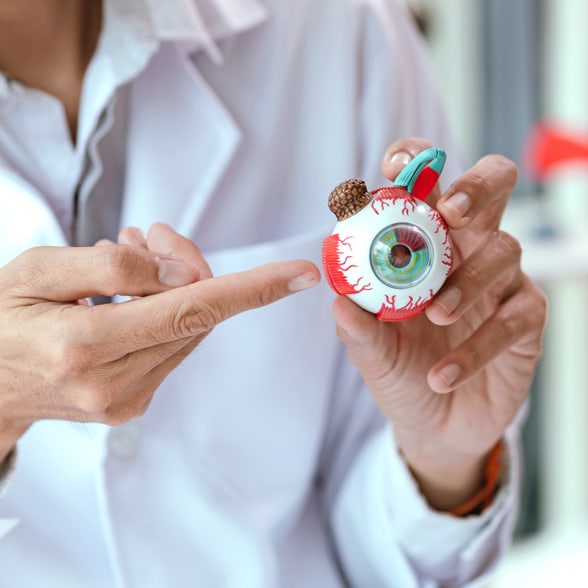
For you to see clearly, light needs to enter your eye and land on the right spot on your retina (the back of your eye). If that light focuses in the wrong place, it causes objects to appear blurry.
This can happen for a few reasons. With myopia, also called nearsightedness, the eyeball is slightly too long, or the cornea curves too sharply, so light focuses just in front of the retina instead of on it.
With hyperopia, sometimes called farsightedness, the opposite happens. The eyeball is shorter than average, or the cornea is too flat, so light focuses behind the retina. Neither myopia or hyperopia is a disease: They’re just variations in how your eye is shaped.
Myopia: Blurry Distance Vision
What Causes Nearsightedness?
Myopia can be influenced by a few factors, genetics being one of them. Myopia often runs in families, so if you’re nearsighted, your kids are more likely to develop it too.
Beyond genetics, spending a lot of time on screens and less time outdoors has been associated with an increased myopia risk in children. Research suggests that time spent outdoors in bright light, looking at distant objects, may help support healthy visual development in children.
Myopia most commonly starts between the ages of 6 and 12, and tends to progress through the school years. Catching it early can give you more options to slow that progression.
Signs to Watch For
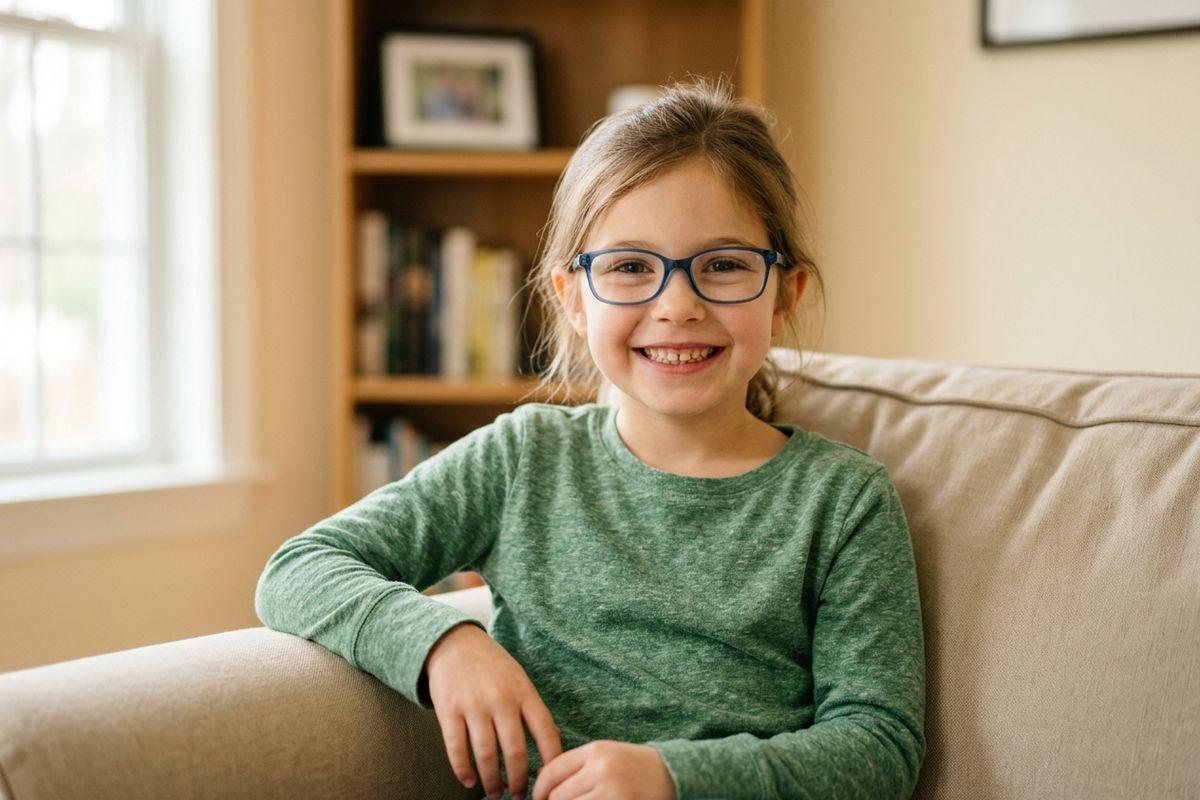
Kids don’t always know their vision is blurry because they think everyone sees the world the way they do. You know your child better than anyone, so it’s important to know what to watch for and when to book them in for a children’s eye exam.
If you’ve noticed any of these signs in yourself or in your loved one, it may be time to book an appointment:
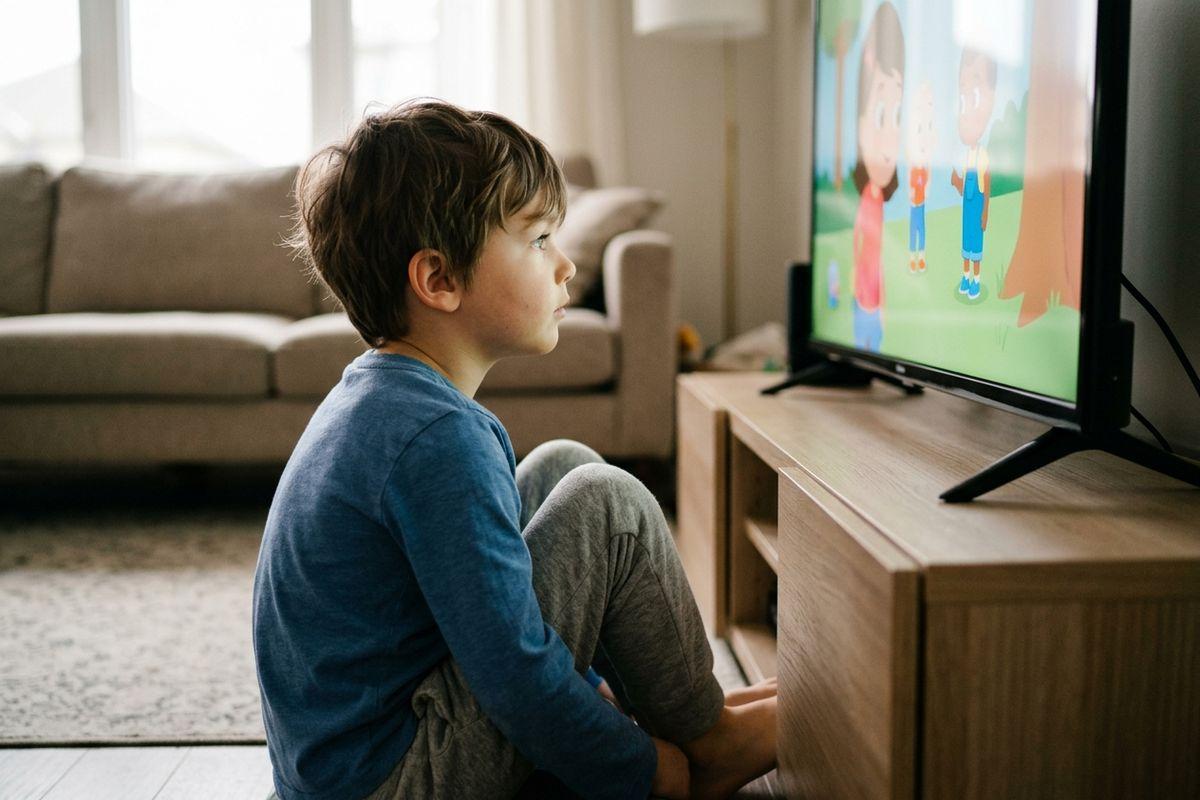
- Squinting to see when looking at distant objects like road signs, the TV, or whiteboards
- Distant objects seeming blurry or out of focus
- Headaches or eye strain after focusing on things far away
- Needing to move closer to objects in order to see them
Hyperopia: Blurry Near Vision
What Causes Farsightedness?
Similarly to myopia, hyperopia also tends to run in families. Some children are born with a mild degree of it, and in many cases, they naturally outgrow it as their eyes develop. However, more significant hyperopia doesn’t correct itself and may benefit from early attention.
While presbyopia shares symptoms with hyperopia, they aren’t the same. Presbyopia is a common age-related vision change that often begins to affect individuals around age 40, and it happens as the eye’s internal lens becomes less flexible. Hyperopia, on the other hand, happens when light doesn’t land right on the retina.
Signs to Watch For
If you notice any of these signs in yourself or a loved one, it may be time for an eye exam:
- Blurry vision when reading, texting, or doing close-up tasks
- Headaches or eye strain after near-focus activities like reading or drawing
- Kids losing interest in drawing, puzzles, or other close-up activities
- Eyes that feel tired after short periods of reading
Key Differences Between Myopia and Hyperopia
The simplest way to tell them apart is by where the blur shows up. Myopia makes far-away things blurry while close objects stay sharp. Hyperopia does the opposite, making nearby things hard to focus on while distance vision often stays clearer.
Both conditions come from a similar root cause, which is the shape of the eye causing light to focus in the wrong spot. They just affect opposite ends of your visual range. A comprehensive eye exam is the reliable way to identify which condition you or your child has and find the right correction.
How Both Conditions Can Be Corrected
Glasses and Contact Lenses
Prescription lenses work by redirecting light so it lands correctly on the retina, providing you with the clear vision you need. Glasses and contact lenses are effective, straightforward options that can make an immediate difference in your day-to-day clarity.
Our team can walk you through contact lens options and fittings to find what works for your lifestyle, or help you explore the right frames and lenses if glasses are your preference.
Myopia Control for Kids
If your child’s prescription keeps getting stronger each year, we provide options to slow the progression of myopia and support their long-term vision. Specialty lenses and low-dose atropine eye drops are a few options that can help manage myopia, which can help reduce the risk of eye issues later in life.
If you’re curious about how myopia control could help your child, our eye doctor in Parksville & Nanaimo would love to help. We can help you determine which approach may fit your family’s lifestyle and preferences.
Laser Eye Surgery
If you want to be less reliant on glasses or contact lenses, procedures like LASIK or PRK may be a good option. These options use a gentle laser to reshape the cornea (the outer layer of the eye), correcting how light focuses and providing you with clear sight.
Not everyone is a candidate, which is why a laser eye surgery consultation is a good starting point to understand your options. Our team can assess your overall eye health and help you decide what could work for your life.
Schedule Your Appointment
Whether you’re noticing distance blur, struggling with close-up tasks, or watching your child squint to see, our team at Oceanside Optometry Clinic can help you get a clear picture of what’s going on. Book an eye exam today and take the next step toward clearer, more comfortable vision.